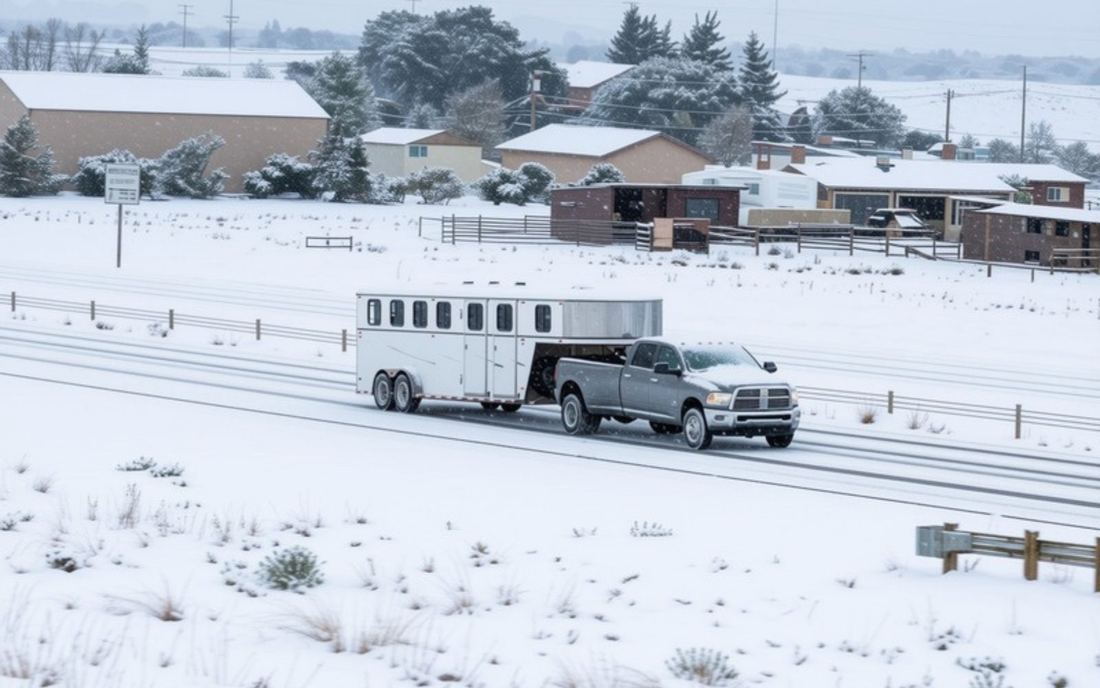
Blanketing in the trailer
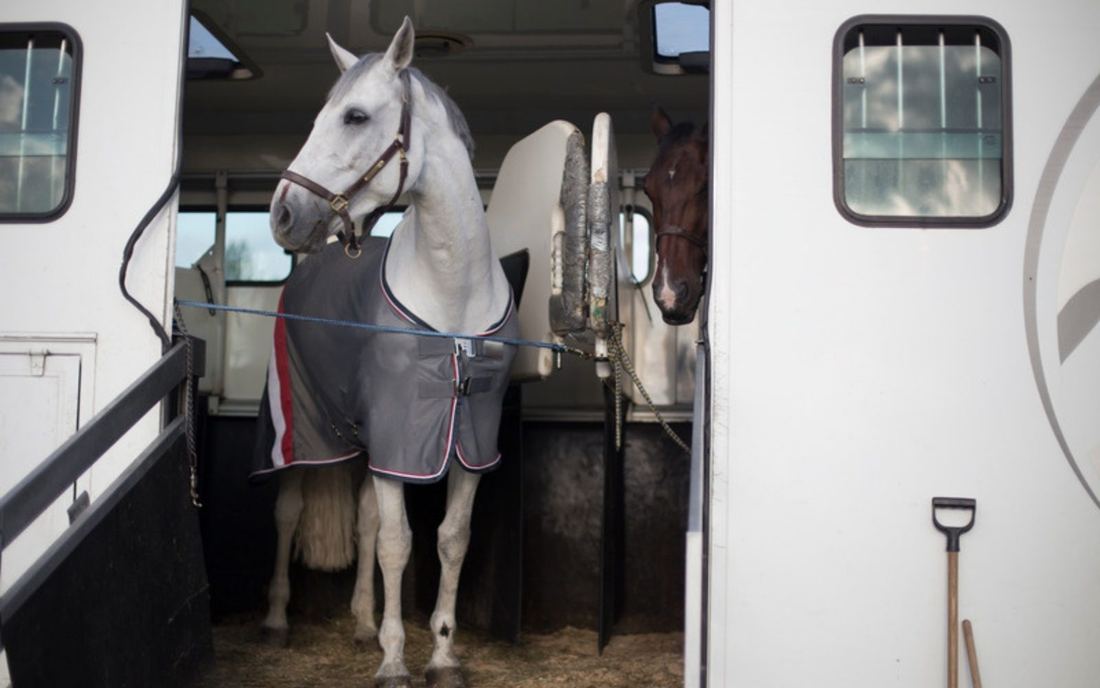
A moving trailer with horses inside is usually warmer than you think. It is easy to overdress a horse for the ride, and a sweaty horse can get chilled quickly when you stop.
- A horse with a full winter coat often does not need a blanket for the trip.
- A clipped horse or one with a thin coat can wear the blanket weight they normally wear.
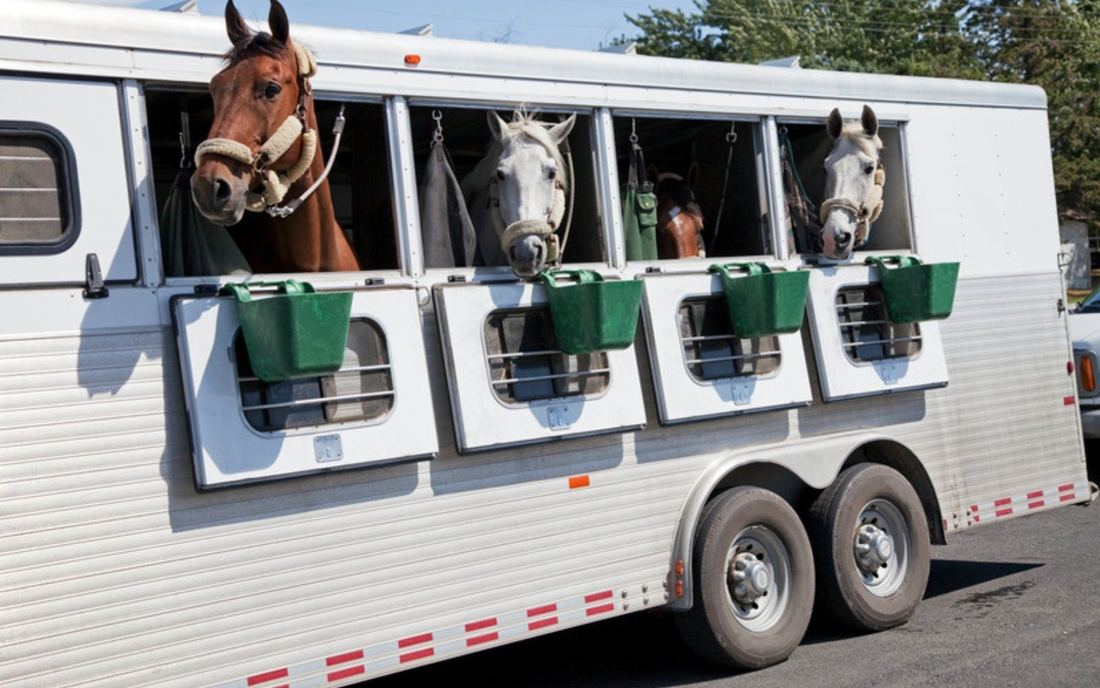
- If your stock trailer's windows do not close, a light sheet can block the wind.
- Pack a couple of blanket weights so you can adjust as the temperature changes along the route, and check under the blanket at each stop for sweat.
Keep the air moving
It is tempting to shut every vent in the cold, but a closed-up trailer traps hay dust, ammonia from urine and manure, and moisture from your horse's breathing. Keep some vents open for fresh air, and open more for clipped horses or a full trailer.
Keep them drinking
Horses often drink less in cold weather and on the road, and dehydration is a common cause of colic. Offer water at every stop, roughly every four hours.
- Bring water from home, or add a flavor your horse already likes so new water tastes familiar.
- Slightly warm water can encourage drinking. An insulated container helps keep it from freezing.
- Soaked hay or a wet mash adds water to their diet. Ask your vet what suits your horse.
Get the rig ready for winter
- Tires: check pressure before every trip. Pressure drops as temperatures fall, and under-inflation is a leading cause of blowouts. Make sure your tread is in good shape.
- Battery: have an older battery tested before the cold sets in.
- Chains: some states and mountain passes require chains for vehicles towing trailers in winter. Check the rules for your route.
- Fuel: fill up before you drop below half a tank, in case of closures or delays.
Driving on winter roads
- Check the forecast and road conditions for the whole route before you go. Many states share road conditions by dialing 511.
- Double your usual following distance and brake gently.
- Slow down for bridges, ramps and curves, where black ice forms first, and skip cruise control on slick roads.
- Four-wheel drive helps you go, not stop.
- Plan shorter days so you arrive at your layover in daylight.
Pack a winter emergency kit
- A shovel, sand or kitty litter for traction, and tire chains
- Extra blankets for your horse and for you, plus warm gloves and a hat
- A flashlight, reflective triangles or a red flag, and a phone charger
- Extra hay, water and feed in case you are delayed for a day
- Your horse's paperwork and emergency contacts in the truck cab
Have a backup stop
Winter storms can close roads with little warning. Before you leave, save a second horse-friendly stop for each night in the RideJoy app, so you have somewhere safe to go if you need to get off the road early.
Sources and further reading. This guide is general information, not veterinary or legal advice. Talk with your veterinarian and check state requirements before you travel.